An academic blog run by, and for, scholars
This site gathers news on OLP and literary-studies publications and events — calls for papers, conferences, lectures, symposia, reviews, articles, and books — for those working at the intersection of these two fields.
Browse recent posts, consult curated bibliographies, or get in touch about the project.
Explore the Full Archive of Posts
Every item published on the blog is collected in the Index, alongside dedicated bibliographies — including a bibliography of secondary writings about Cavell.
What You'll Find Here
A quick look at the site's main sections.
 Bibliographies
 Index of Posts
 Events & CFPs
 Guestbook
About This Project
OLP & Literary Studies Online serves scholars and students who work where ordinary language philosophy meets literary studies. The site tracks relevant publications and events and maintains bibliographies for reference, including a bibliography of secondary writings about Cavell. How does ordinary language philosophy challenge traditional views of authorial intention? Our latest post explores this question: How Ordinary Language Philosophy Rethinks Authorial Intention
Carly Lane, associated with the Committee on Social Thought at the University of Chicago, can be reached at carlylane@olponline.org.
Ordinary language philosophy invites us to attend to what we say and when we say it, not as a technical exercise but as a way of recovering the shared criteria that underpin our forms of life. In literary studies, this attention opens new ways of reading: not by imposing theoretical frameworks from above, but by following the grain of the text and the ways its language shapes meaning in practice. The result is a mode of criticism that is patient, descriptive, and alive to the ordinary. Read our new post on Wittgenstein, imponderable evidence, and literary judgment. Wittgenstein, Imponderable Evidence, And Literary Judgment
Stanley Cavell’s work remains a touchstone for those who refuse to separate philosophy from the experience of reading. His insistence that the claims we make about texts are also claims about ourselves—about what we can say and mean—has reshaped how literary scholars approach questions of voice, scepticism, and acknowledgment. Cavell shows that the encounter with a poem or a novel can be as philosophically serious as any argument.
The later Wittgenstein’s emphasis on use, practice, and the embeddedness of language in everyday activity has proven remarkably generative for literary studies. Rather than treating meaning as a private mental event or a system of abstract rules, Wittgensteinian approaches encourage readers to look at how words do their work in specific contexts. This has led to renewed interest in the textures of dialogue, the grammar of narrative, and the ethical stakes of linguistic attention.
Pragmatism offers another vital strand in the conversation between philosophy and literature. Thinkers in this tradition understand ideas as instruments for coping with the world, and they read literary works as sites where concepts are tested, stretched, and remade. The pragmatist orientation helps scholars resist the temptation to treat theory as a master key and instead keeps the focus on what a particular text can do for a particular reader in a particular situation.
The relationship between ordinary language philosophy and moral thought is especially rich terrain for literary critics. Questions about intention, responsibility, and judgment are woven into the fabric of narrative, and OLP provides tools for examining how moral concepts operate in the messy, particular circumstances that novels and plays depict. This approach sidesteps abstract theorising in favour of close attention to the way ethical life is actually lived and expressed.
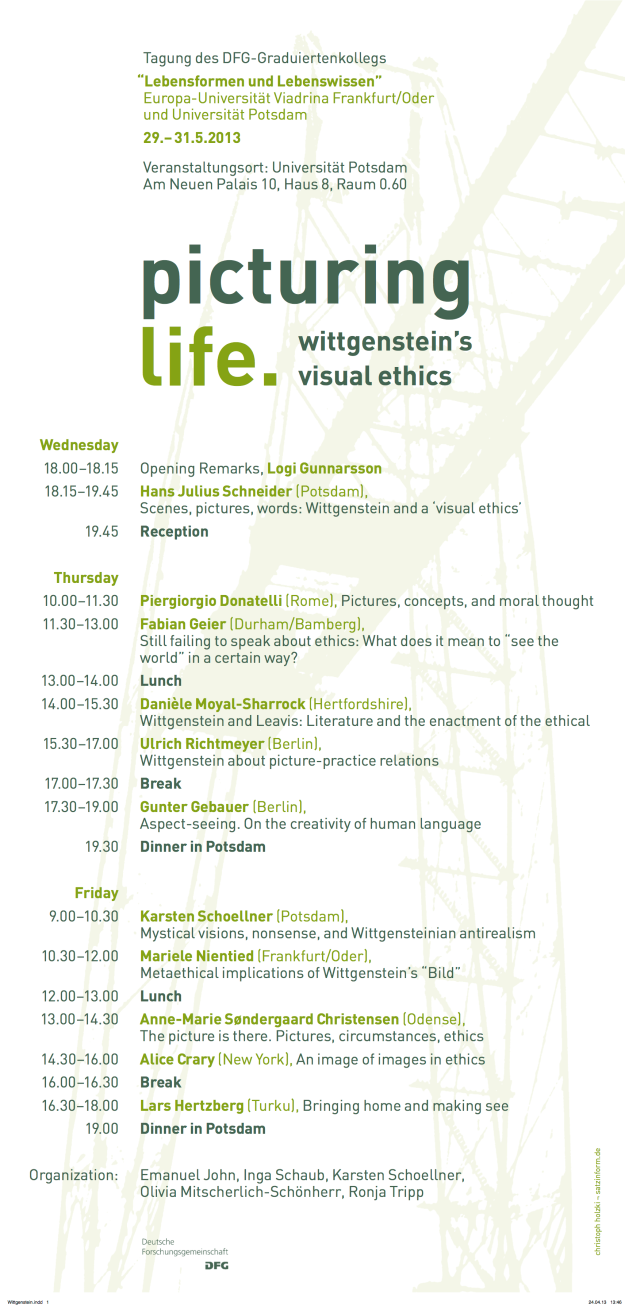
Conferences, workshops, and symposia dedicated to the intersection of OLP and literary studies have grown steadily in recent years, creating spaces where scholars can share work in progress and test new readings. These gatherings tend to be collaborative and exploratory, reflecting the philosophical commitments of the field itself. They offer graduate students and established researchers alike the chance to think together about what it means to read with philosophical care.
Curated bibliographies and reading lists have become essential resources for those entering this interdisciplinary terrain. They map the key texts—from classic statements by Wittgenstein and Austin to contemporary work that brings ordinary language philosophy into dialogue with critical theory, poetics, and cultural studies. Such resources help newcomers find their bearings while also revealing the depth and variety of scholarship already underway.
The blog format itself embodies something of the spirit of ordinary language philosophy: it is provisional, conversational, and responsive to the everyday. Short posts, reflections, and announcements accumulate over time, building a living archive of a scholarly community in motion. Browsing through past entries reveals the rhythm of the academic year, the emergence of new themes, and the steady, collective labour of thinking through the relationship between philosophy and the literary.
Stay Updated
Updates can be followed by email digest or through an RSS feed reader, with the option to unsubscribe from email updates at any time.